

Key Takeaways
- Converting from a long-term to short-term rental can increase gross revenue by 2-3x, but comes with higher operating costs and more hands-on management
- The full conversion process typically takes 60-90 days from decision to first guest, depending on permit timelines and furnishing lead times
- Permits, furnishings, and listing setup are the three biggest upfront tasks — each has its own timeline and cost range
- Short-term rentals in high-demand markets earn net income 20-60% higher than long-term leases on the same property after expenses
- The switch is rarely as simple as "just list it on Airbnb" — this guide walks through what the conversion actually looks like
If you've been renting your property long-term and you're wondering whether switching to short-term makes sense, you're not alone. It's one of the most common questions we hear from property owners in San Diego, Nashville, and every other market we work in.
The honest answer is: it usually does make financial sense in the right market. But the transition involves more than just canceling a lease and creating an Airbnb account. There are permits to pull, a property to furnish, a listing to build, and a pricing strategy to put together — and the order in which you do those things matters.
Here's what the conversion actually looks like, step by step.
Step 1: Check the Local Rules First
Before you do anything else, find out whether short-term rentals are legal in your city, and if so, what the permit requirements are.
This isn't bureaucratic box-checking. In markets like San Diego, Nashville, and Phoenix, operating without proper permits can result in fines, forced delistings, and liability issues. Some cities have caps on the number of STR permits available. Others restrict STRs to owner-occupied properties only.
In San Diego specifically, the city has a tiered STRO (Short-Term Rental Ordinance) permit system based on property type and how often the owner occupies the unit. Processing times vary. Applying for the wrong permit type is a common and avoidable mistake.
If your property is in a HOA, check the CC&Rs too. Some HOAs prohibit short-term rentals outright or have their own restrictions layered on top of city rules. You want to know about these before you invest in furniture.
Our guide on San Diego short-term rental regulations covers the local specifics in more detail if that's your market.
Step 2: End the Long-Term Lease Correctly
If you have an existing tenant, you'll need to follow your state's legal process for ending the tenancy. This is not the place to cut corners.
Most states require 30 to 60 days' written notice to end a month-to-month lease, depending on how long the tenant has been there. Fixed-term leases need to run to their end date unless you have legal grounds to terminate early or you reach a mutual agreement with your tenant.
Some investors offer a cash-for-keys arrangement to speed up the process — essentially paying the tenant to vacate early. Whether that makes sense depends on how much STR revenue you're leaving on the table each month versus the cost of the payment.
Document everything and consult a local real estate attorney if you're unsure about the process in your state. Tenant law varies significantly.
Step 3: Assess the Property's Current Condition
Once you have possession, walk the property with fresh eyes — or better yet, have someone else do it.
Long-term rentals tend to accumulate deferred maintenance. Things that a tenant may have lived with for years (a sticky cabinet door, outdated light fixtures, worn carpet) will show up immediately in guest photos and reviews. Short-term rental guests compare your property against hotels, not apartments. Their expectations are different.
Make a list of what needs to be repaired versus what just needs to be refreshed. Paint is one of the highest-ROI updates you can make — a fresh coat of a well-chosen neutral can make a dated property look brand new in photos.
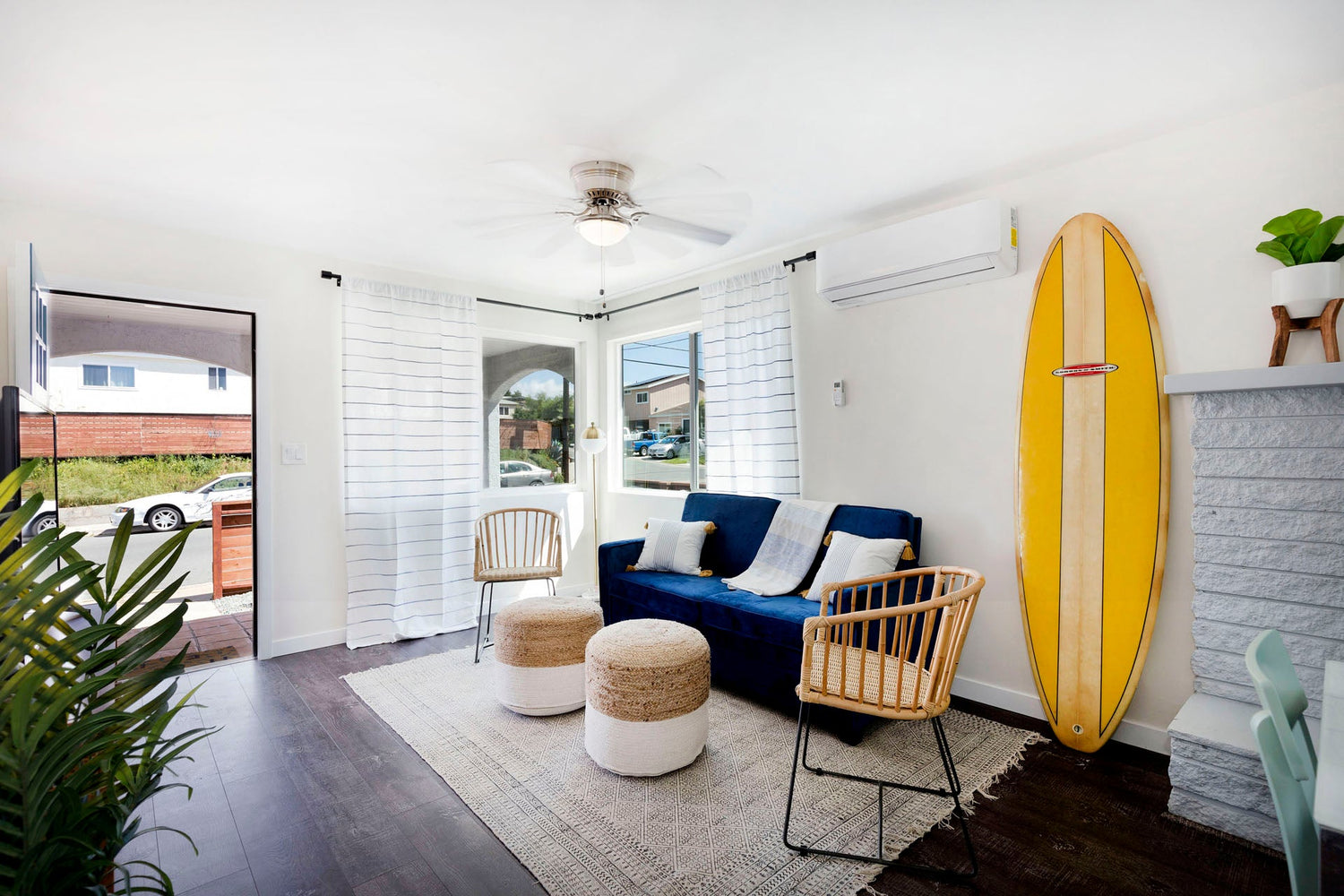
Our interior design approach is focused specifically on vacation rental ROI. We're not designing for a magazine spread. We're designing for photos that convert browsers into bookings and spaces that generate five-star reviews.
Step 4: Furnish for Short-Term Rental, Not Long-Term Living
This is where most first-time converters underestimate both the cost and the importance.
A furnished short-term rental needs everything: beds, linens, pillows, towels (at least two full sets per bedroom), kitchen supplies, cleaning products, bathroom basics, TV and streaming access, Wi-Fi, and extras like coffee makers, trash bags, and a welcome guide. Most new hosts underestimate furnishing costs by 30-50%.
A reasonable estimate for furnishing a 2-bedroom property from scratch is $8,000-$15,000 depending on quality level and your market's guest expectations. That number climbs if you're targeting the luxury end of the market.
A few principles that will save you money and headaches:
Choose durable over decorative. That beautiful velvet couch looks great in photos and holds up terribly to real guests. Buy the commercial-grade version of anything that gets touched frequently — mattresses, sofas, pots and pans, towels.
Buy multiples of consumables up front. Running out of toilet paper or coffee pods because you didn't stock up is an avoidable review risk.
Hire a professional photographer before your first booking. Poor photos are the single most common reason a well-furnished property underperforms. This is not the place to use your phone.
For practical tips on what guests actually need, our post on mastering Airbnb hosting as a new host covers the guest experience basics in detail.
Step 5: Build Your Listing on the Right Platforms
Where you list and how you list both matter.
Airbnb is the obvious starting point, but listing on VRBO and Booking.com expands your reach and fills calendar gaps that Airbnb alone won't cover. Different platforms attract different guest types. VRBO skews toward families and longer stays. Booking.com pulls in travelers who typically book hotels and are branching out into vacation rentals.
A channel manager syncs your calendars across platforms so you're not managing availability manually or risking double bookings.
Your listing title, photos, and description are the front door. Spend time on them. A title that says "2BR near downtown" does nothing. A title that says "Game Room + Fire Pit | Walk to Restaurants" tells a guest exactly why they should click.
Step 6: Price It Strategically from Day One
New listings start without reviews, which means you're competing against established properties with social proof you don't have yet. A modest introductory price to generate initial bookings and reviews is a smart tradeoff — you give up a little early revenue to build the review base that drives higher rates later.
After your first 5-10 reviews, you have real data to price against. Use dynamic pricing tools like PriceLabs or Beyond to adjust rates in response to market demand, local events, and seasonal patterns instead of setting a flat rate and hoping for the best.
Our guide to setting the right price for your vacation rental walks through the strategy in depth if you want more detail on this.
Step 7: Set Up Your Operations Before You Open
A lot of first-time STR owners get their listing live before they've figured out how they're going to run the property day-to-day. That's backwards.
Before your first guest checks in, you need:
- A reliable cleaning crew who can turn the property between same-day checkouts and check-ins
- A clear process for handling maintenance issues (who do you call at 10pm if a pipe bursts?)
- Automated messaging for booking confirmation, check-in instructions, and post-stay review requests
- A key handoff system — most hosts use keypad locks or lockboxes to avoid being on-site for every check-in
The operational details are where long-term rental investors most often get caught off guard. The income potential is there, but it requires a level of active management that's different from collecting rent once a month.
If that part sounds like a lot, that's exactly what full-service management handles. Most of our clients came to us precisely because they wanted the STR income without the 3am text messages.
What the Numbers Look Like
In most high-demand markets, short-term rentals earn 2-3x more gross revenue than long-term leases on the same property. After accounting for management fees, cleaning costs, consumables, and vacancy, the net income advantage is typically 20-60% over long-term rental income.
That range is wide because it depends heavily on your market, property type, and how well the property is managed. A poorly run STR in a good market can actually underperform a long-term lease. A well-run STR in a great market will lap it.
Use our free income estimator to see what your specific property could earn before you commit to the conversion.
Frequently Asked Questions
How long does it take to convert a long-term rental to a short-term rental?
The full process typically takes 60-90 days. Permit processing is often the longest variable — some markets process in 2-3 weeks, others take 60+ days. Furnishing and photography can usually happen in 2-4 weeks once you have possession of the property.
How much does it cost to set up a vacation rental?
Furnishing a 2-bedroom property from scratch typically runs $8,000-$15,000. Add permit fees (varies by city), professional photography ($200-$500), and any repairs or upgrades needed before listing. Budget conservatively and assume costs will come in higher than your first estimate.
Do I need to pay taxes on short-term rental income?
Yes. STR income is taxable, and most cities also require you to collect and remit Transient Occupancy Tax (TOT) on each booking. Airbnb and other platforms collect and remit TOT in many jurisdictions, but you should verify this for your specific market. We cover the tax side in more depth in our post on vacation rental tax benefits owners often miss.
Can I convert any long-term rental to a short-term rental?
Not always. HOA restrictions, city zoning rules, and STR permit caps can limit your options regardless of what you'd prefer to do. Always verify local regulations before you give notice to a tenant or invest in furnishings.
Is self-managing a vacation rental realistic?
It depends on your availability and proximity to the property. Self-management is doable for some owners, particularly if they live nearby. But most owners underestimate the time commitment until they've handled a few 11pm lock issues, emergency maintenance calls, and same-day turnovers. Many start self-managing and transition to professional management once they see what's involved.
What is the biggest mistake owners make when converting?
Getting the listing live before the operations are ready. It's easy to set up a listing, but if your cleaning process, key handoff, or communication systems aren't in place when guests start arriving, you'll earn poor reviews that follow the property for months.



Leave a comment
This site is protected by hCaptcha and the hCaptcha Privacy Policy and Terms of Service apply.