

Key Takeaways
- Scottsdale averages $397/night ADR with 59% annual occupancy and up to $39,858 in monthly revenue during peak months (AirDNA, 2026)
- Phoenix averages $181/night ADR with 66% occupancy and approximately $45,000 average annual revenue (Airbtics, 2026)
- Scottsdale's peak season (November-March/April) and Phoenix's peak (winter and spring training) create opposite seasonal challenges from San Diego and Nashville
- A pool is not optional in the Phoenix/Scottsdale market. Properties with pools command significantly higher rates and maintain occupancy through summer that non-pool properties cannot
- Arizona is one of the most STR-friendly states in the country. State law prevents municipalities from banning short-term rentals outright
Phoenix and Scottsdale represent the third major market in Stay Classy Homes' portfolio, and they operate on a completely different seasonal rhythm from San Diego and Nashville. Understanding that rhythm before investing is the difference between a property that performs well all year and one that earns well for six months and struggles for the other six.
Here's the full income picture for Phoenix and Scottsdale in 2026, broken down by market, season, property type, and what separates the top performers from the average.
The Two Markets Are Different
Phoenix and Scottsdale are adjacent but serve different guest profiles.
Scottsdale attracts luxury-oriented visitors: golf travelers, bachelorette groups, spa retreaters, and high-spending couples. Old Town Scottsdale's entertainment district, proximity to TPC Scottsdale and other premier golf courses, and the Scottsdale resort corridor make it one of the top 25 STR markets in the US by revenue. (Awning, 2026)
Phoenix is more accessible from an acquisition cost standpoint and attracts a broader mix: families, sports travelers, and snowbirds who prefer urban amenities over resort settings. Phoenix's proximity to Tempe and ASU also creates a collegiate event and tournament market.
The performance data reflects these differences:
Scottsdale benchmarks (AirDNA/AirROI, 2026):
- Average Daily Rate: $397/night
- Annual occupancy: 59% average (68-75% for well-managed properties)
- Peak month occupancy: 72.6% in March 2026 (up from 67% in March 2025)
- Peak month ADR: $467 in March 2026 (up from $418 in March 2025)
- Top 10% of listings command $706+/night (AirROI, 2026)
- Well-managed 3BR North Scottsdale: $80,000-$100,000 annually (Awning, 2026)
Phoenix benchmarks (Airbtics, 2026):
- Average Daily Rate: $181/night
- Median occupancy rate: 66%
- Average annual revenue: approximately $45,000
- Active listings: 6,162 Airbnb listings as of March 2026
The ADR gap between the two markets is significant. Scottsdale commands over twice Phoenix's nightly rate on average. But Phoenix's lower acquisition costs mean the investment math can still work favorably depending on purchase price and property type.
The Seasonal Pattern
The Phoenix/Scottsdale seasonal pattern is almost the mirror image of a traditional summer-peak market. Understanding this is the most important thing for any investor evaluating the market.
Peak season: November through April. The winter months are when snowbirds arrive from colder climates, spring training baseball (late February through March) fills properties with fans from across the country, and Scottsdale's resort atmosphere draws maximum traffic. Spring break overlaps with the end of spring training, extending the peak well into April.
March is the strongest month. According to GoodNight Stay's March 2026 market report, Scottsdale occupancy hit 72.6%, ADR reached $467, and RevPAR was $339 in March 2026, all significantly above the prior year's benchmarks.
Summer is the challenge. Phoenix summer temperatures regularly exceed 110°F in July and August. Occupancy drops to 45-55% for properties without pools and can remain meaningfully higher for pool properties, but summer is definitively the slow season. According to Awning's 2026 analysis, Scottsdale's summer dip to 45-55% occupancy requires factoring summer carrying costs into any investment projection.
This seasonal dynamic has direct implications for financial planning. A Phoenix/Scottsdale vacation rental that performs at $7,000-$10,000/month from November through April needs that revenue to carry a July that might generate $2,000-$3,000. Annual income projections that assume consistent monthly performance are misleading. Model the actual monthly seasonality.
The Pool Question: Not Optional
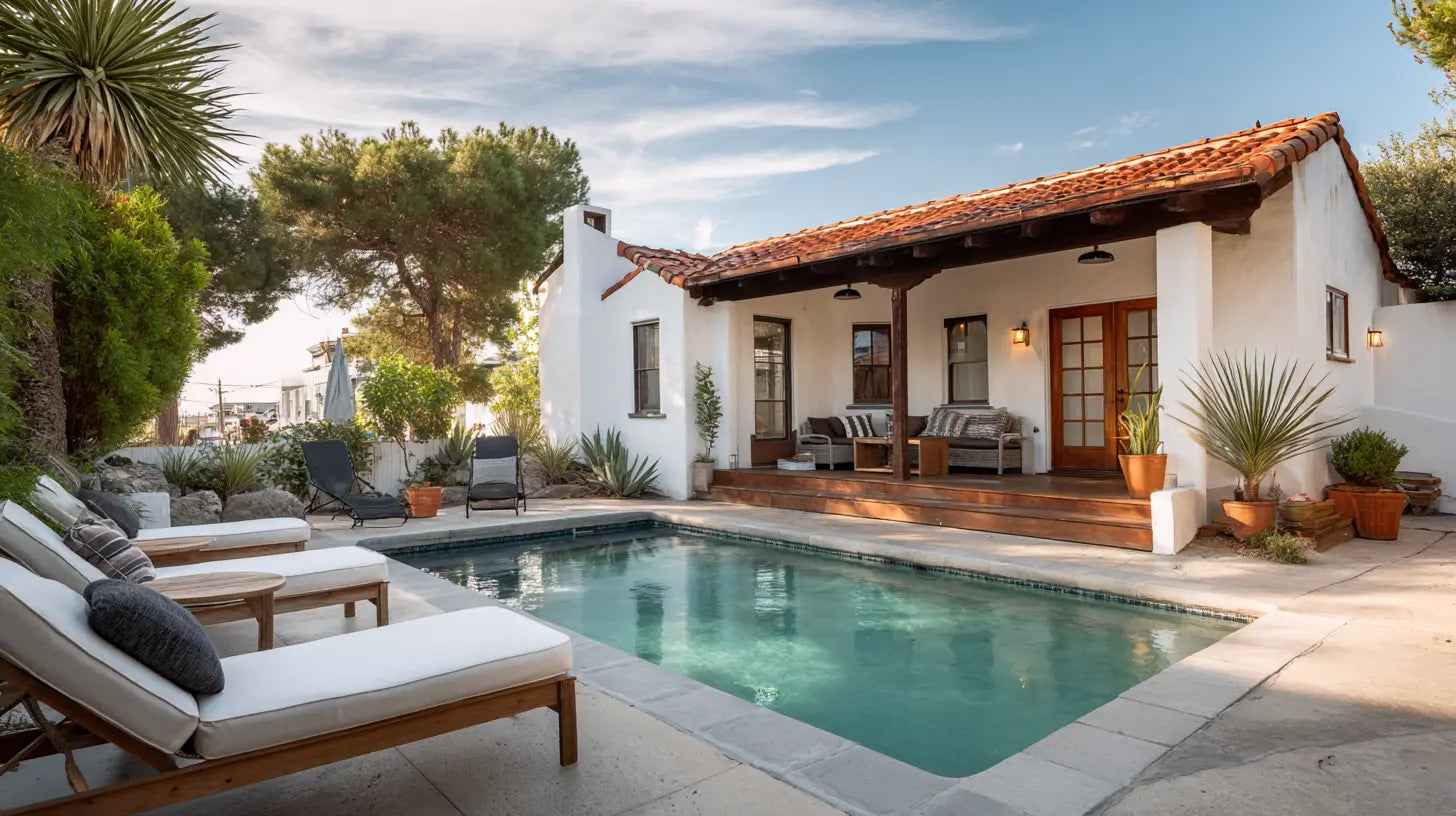
In a desert market, a pool is a primary amenity, not a secondary one. During summer, properties without pools lose meaningful occupancy to comparable pool properties because heat-sensitive guests will not book a property without a way to cool off. During winter, pools heat to a comfortable temperature and remain a significant booking differentiator.
According to Awning's 2026 Scottsdale market analysis, properties with pools command significantly higher rates than comparable homes without them, and summer pool occupancy remains notably higher than non-pool occupancy.
If you're evaluating a Phoenix/Scottsdale property for vacation rental investment and it doesn't have a pool, factor in whether pool installation is feasible. The cost ranges from $25,000-$60,000 depending on size and features, and it directly affects both nightly rates and occupancy stability across the full year.
Properties with heated pools, outdoor entertainment spaces, and shaded lounge areas command the premium rates across all seasons.
What Types of Properties Perform Best
Scottsdale:
Large homes (4-6 bedrooms) targeting bachelorette groups, family reunions, corporate retreats, and golf groups are the highest earners. These properties book well in advance and at premium rates. They require strong management because of the group dynamic. Awning's data shows that a well-managed 3BR home in North Scottsdale earns $80,000-$100,000 annually, with 5BR and 6BR properties scaling significantly above that.
Old Town Scottsdale condos (1-2 BR) perform well for couples and short stays, with ADR in the $200-$350/night range depending on views, finishes, and proximity to Old Town entertainment. Competition is higher in this segment than in larger homes.
Phoenix:
Mid-size homes (3-4 bedrooms) with pools represent the strongest value proposition. They serve the family traveler, the sports group, and the snowbird segment without the operational intensity of 6-bedroom group homes. ADR is lower than Scottsdale but occupancy can be strong with proper positioning for each season.
Regulatory Environment: Good News for Investors
Arizona is one of the most vacation rental-friendly regulatory environments in the country. State law (A.R.S. 9-500.39) specifically prevents local municipalities from banning short-term rentals outright. Cities can regulate STRs but cannot prohibit them.
Scottsdale requires hosts to obtain a Transaction Privilege Tax (TPT) license from the Arizona Department of Revenue, register with the city, and carry liability insurance of at least $500,000. No occupancy caps or minimum stay requirements at the municipal level as of 2026. (Awning, 2026)
Phoenix requires an STR permit from the Planning and Development Department, a Maricopa County registration, and $500,000 liability insurance. Combined taxes in Scottsdale run approximately 14.27%.
Most platforms (Airbnb, VRBO, Booking.com) collect and remit the lodging/transaction privilege taxes on your behalf for bookings made through their platform. For direct bookings, you're responsible for collecting and remitting these taxes yourself.
For HOA communities, particularly in Scottsdale's golf course developments, verify HOA rules before purchasing. Some HOA communities have their own restrictions that exist independent of city regulations.
Spring Training: A Revenue Event Worth Understanding
Spring training season (late February through March) is the most powerful demand event in the Phoenix metro calendar. All 15 Cactus League teams practice and play across the Valley, drawing hundreds of thousands of fans who specifically seek vacation rental accommodations over hotels.
Properties within convenient distance of Camelback Ranch (White Sox/Dodgers), Salt River Fields (Rockies/Diamondbacks), Peoria Sports Complex (Padres/Mariners), or Goodyear Ballpark (Reds/Guardians) can command rates 50-100% above their standard winter rates during this 6-week window.
If you're not pricing specifically for spring training, you're leaving meaningful revenue behind. Set premium rates and 5-7 night minimum stays for the spring training window in October or November, well before baseball fans start their search.
Portfolio Comparison: Phoenix/Scottsdale vs. San Diego vs. Nashville
For investors building a multi-market portfolio or choosing between markets, here's a simplified comparison of the three major Stay Classy markets:
| Scottsdale | San Diego | Nashville | |
|---|---|---|---|
| Peak Season | Nov-Apr | Jun-Aug | Mar-May, Sep-Oct |
| Average ADR | $397 | $250-400+ | $345 |
| Summer Performance | Challenging | Strongest | Moderate |
| Regulatory Friendliness | Very High | Moderate (STRO) | Moderate |
| Best Property Type | Large homes, pools | Beach proximity | Group homes |
| Pool Required? | Yes for full performance | No | No |
Frequently Asked Questions
How much can a 4-bedroom home earn in Scottsdale annually?
A well-managed 4-bedroom Scottsdale home with a pool typically earns $75,000-$120,000 annually. Properties in premium locations (North Scottsdale near golf, Old Town Scottsdale, or luxury communities) and with strong amenity packages (heated pool, outdoor entertainment, high-end finishes) land at the top of that range.
How do I manage the summer slow season in Phoenix/Scottsdale?
Dynamic pricing is essential for summer. Lower your rates meaningfully (30-50% below peak) and attract the guests who do travel to Phoenix in summer: family road trippers, music festival attendees, and travelers with flexible schedules seeking value. Minimum stay requirements should shorten in summer to fill what occupancy exists. Some owners also use the summer window for maintenance, deep cleans, and property upgrades.
Is Scottsdale's STR market getting too competitive?
Supply grew approximately 18% in 2024. (Awning, 2026) Competition has increased, and properties that are not professionally managed, photographed, and priced dynamically underperform significantly. The top tier of the market is still performing very well. The middle and lower tiers are where competition pressure is most felt.
What taxes do I need to collect in Scottsdale?
Combined taxes total approximately 14.27% in Scottsdale. You need a Transaction Privilege Tax license from the Arizona Department of Revenue, and most platforms handle tax collection for platform bookings. For direct bookings, you're responsible for remitting these taxes yourself. Work with an Arizona-based accountant or tax advisor for your specific situation.
How far in advance do Scottsdale guests typically book?
The average booking window for Scottsdale is 63 days based on March 2026 data (GoodNight Stay). Spring training bookings come in earlier, often 90-120 days in advance. Summer bookings are more last-minute. Setting your peak rates well in advance and using a dynamic pricing tool that adjusts downward as dates approach is the right approach.
Phoenix and Scottsdale offer genuine vacation rental opportunity for investors who understand the seasonal pattern and build a property operation that takes advantage of it. The winter peak is real and strong. The summer challenge is manageable with the right pricing and positioning. The regulatory environment is among the best in the country.
If you're interested in how Stay Classy Homes manages properties in the Phoenix/Scottsdale market, reach out to our team to discuss your specific property.

Leave a comment
This site is protected by hCaptcha and the hCaptcha Privacy Policy and Terms of Service apply.