

Key Takeaways
- Your cover photo is the single most important element in your listing. Guests spend more time on photos than reading your description
- Aim for 25-40 photos total. Too few looks like you're hiding something; too many is overwhelming
- Professional photography increases bookings by up to 24% and revenue by up to 40% (Guesty, 2024)
- Your title needs to lead with your property's single best differentiator in the first few words
- According to PriceLabs' 2025 Global Host Report, 63% of hosts worry about OTA visibility. A properly optimized listing is the most direct fix
There are over 7.7 million active listings on Airbnb and 2 million on VRBO. (PriceLabs, 2025) A traveler searching San Diego for dates has dozens of options that all look similar on the surface. The properties that consistently convert browsers into bookings aren't necessarily the nicest ones. They're the ones that communicate value fastest.
This is a formula. It's learnable, repeatable, and it directly affects how much you earn.
Your Cover Photo Has One Job
The cover photo determines whether a guest clicks. That's it. If they don't click, nothing else matters.
The cover photo should show the most emotionally resonant aspect of your property. Not the most expensive piece of furniture. Not the room you personally like best. The thing that makes a guest want to be there.
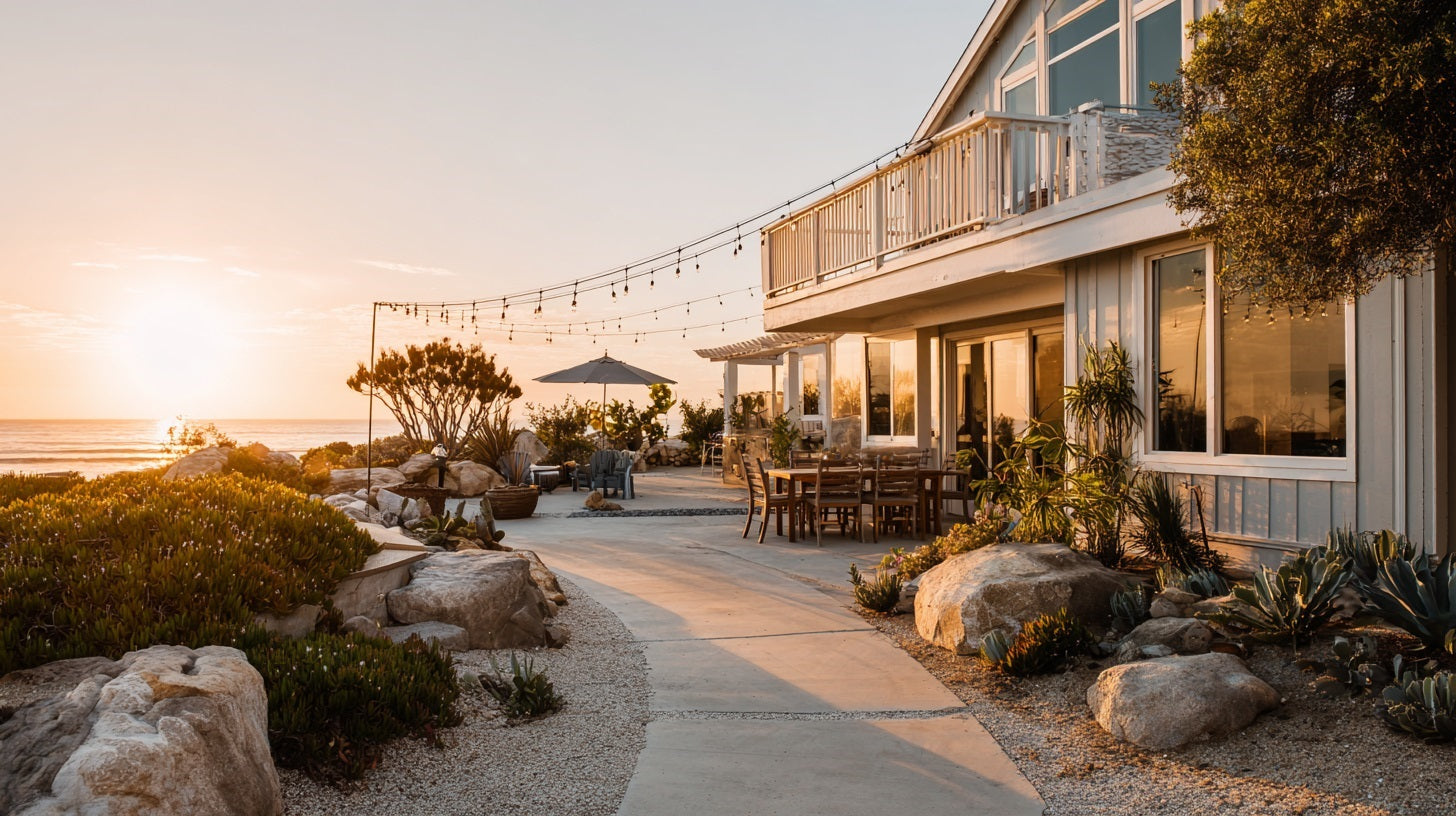
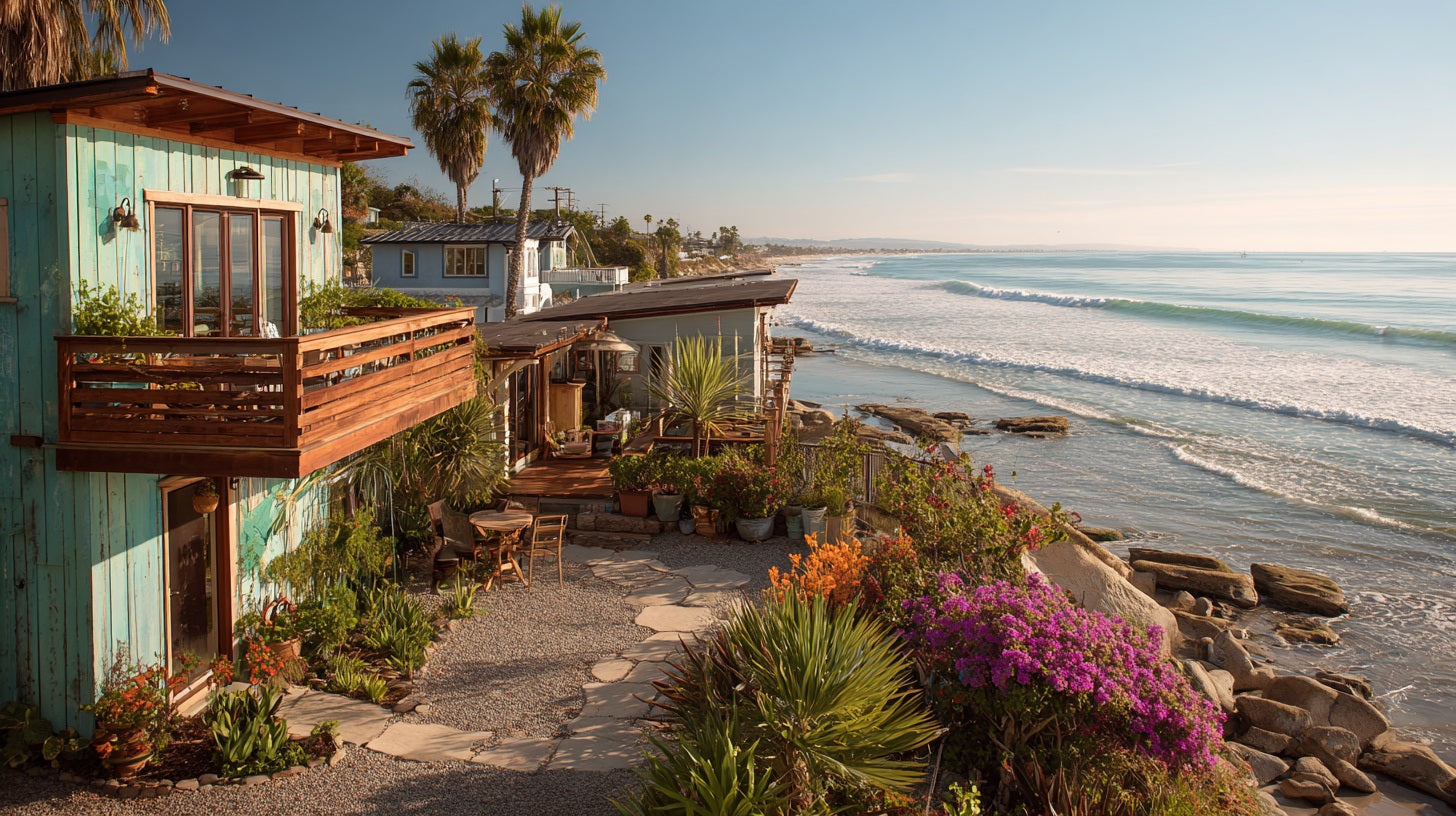
For a San Diego property near the beach, that's the view or the outdoor space. For a North Park property with a well-designed interior, that's the living room shot in natural light. For a larger family home with a pool, that's the pool and backyard.
According to Awning's 2026 vacation rental marketing analysis, the highest-performing cover photos lead with the property's differentiation clearly visible in the image, not in the caption. Guests make the click decision in under two seconds. The photo has to do all the work.
What consistently underperforms: photos taken with an iPhone in poor light, photos of the kitchen when the outdoor space is the property's best feature, and photos where the background is cluttered or doesn't feel like a destination.
The Title Formula
Your listing title competes directly in search results. It's what a guest reads after your cover photo earns the click.
The formula that works: [Specific Differentiator] | [Location or Setting] | [Secondary Feature]
Examples:
- "Ocean View Rooftop | Walk to Balboa Park | Sleeps 8"
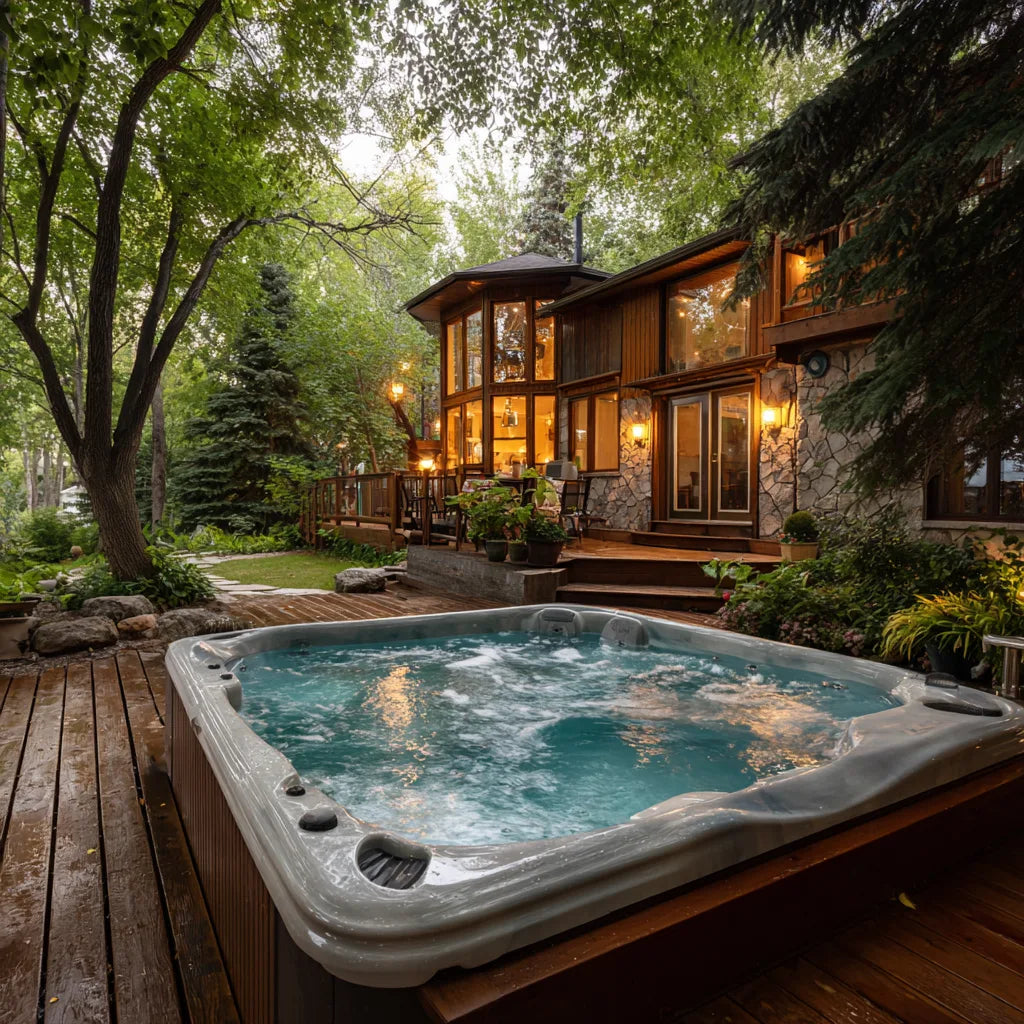
- "Hot Tub + Private Yard | North Park | 2BR Designer Home"
- "Steps to PB Boardwalk | Bright 3BR | Free Parking"
What doesn't work: vague descriptors ("Cozy," "Charming," "Lovely"), adjective stacking without specifics, and leading with bedroom count when you have a more compelling feature.
According to Awning's 2026 vacation rental marketing and listing optimization guide, titles that lead with a specific amenity or feature consistently outperform generic titles regardless of how well the rest of the listing is written. "Cabin with Hot Tub, Mountain Views, 5 min to Ski Lift" is measurably better than "Cozy 2BR Retreat."
Your location indicator should be specific enough to be meaningful to someone who knows the area. "San Diego" is too broad. "North Park" or "5 min to Pacific Beach" tells a guest exactly what they're getting.
The First 50 Words of Your Description
Most guests don't read listings. They skim. The first 50 words of your description need to answer the questions a guest is actually asking: What kind of experience will I have? Is this the right property for my trip?
Start with the stay, not the property. Instead of "This beautiful 3-bedroom home features an open floor plan and updated kitchen," try "You're ten minutes from the beach and walking distance to San Diego's best brunch spots. The backyard is made for late-afternoon wine."
Tell guests what they'll do and feel, then give them the specs.
That approach mirrors how experienced San Diego property owners position their listings for the guest who's imagining the trip, not analyzing the property. The guest experience angle converts better than feature lists.
Photo Count and Order Matter
Aim for 25-40 photos. According to Weekender Management's listing optimization guide, fewer than 20 suggests you're hiding something. More than 50 overwhelms and dilutes attention from your best shots.
The ideal photo order:
- Cover photo (outdoor space or best interior shot)
- Living room (second most important first impression)
- Primary bedroom
- Kitchen
- Bathroom(s)
- Secondary bedrooms
- Outdoor space (multiple angles)
- Neighborhood or location shot
- Any standout amenity (firepit, hot tub, game room)
- Detail shots (welcome setup, coffee station, etc.)
Every photo should be taken in natural light when possible. Late morning on a clear day is typically the best window. The goal is showing what it actually looks like when guests arrive, not a version that requires ideal conditions to see.
Professional photography costs $150-500 for most vacation rental shoots and often pays for itself within a few bookings through improved conversion. (Weekender Management, 2025) For a property earning $4,000-5,000 per month, even a 5% improvement in booking rate covers the cost quickly.
Amenities: Check Everything That's Accurate
Airbnb and VRBO rank listings partly based on amenity completeness. Hosts routinely leave amenities unchecked because they forget they exist or don't realize they apply.
Go through the full amenity list and check everything that's accurate: hair dryer, iron, coffee maker, dedicated workspace, free parking on premises, pool, BBQ grill, fire pit, beach essentials. If it's in the property, check it.
Guests also filter search results by amenity. A guest looking for a "BBQ grill" won't see your listing if you haven't checked the box, even if you have one.
Don't list amenities you don't have. That creates a review problem that erases any listing benefit.
Your Description's Structure
After the opening hook, organize your description to answer what guests typically want to know:
- The setting and what's nearby (walking distance? Driving distance?)
- Sleep configuration (not just "6 guests" but "two king beds, one queen, plus a pull-out sofa")
- Kitchen setup (fully equipped? Coffee maker? Instant Pot?)
- Outdoor space
- Parking
- Check-in logistics (keyless entry? What's the process?)
- House rules summary
Write in short paragraphs. Two to three sentences per paragraph maximum. Bullet points work for specific features but prose converts better for the opening and the setting description.
Avoid banned language that makes listings feel corporate or inauthentic. Words like "seamless," "luxurious," and "unparalleled" appear in thousands of listings and mean nothing to a guest who's read them a hundred times.
Keeping Your Listing Current
Listings aren't set-and-forget. The properties that maintain strong placement on Airbnb and VRBO refresh their content regularly.
Update your photo order seasonally. Outdoor shots with summer light perform better when you make them the lead photo heading into summer. Cozy interior shots with warm lighting work better in fall and winter.
Update your description to reference local events or seasonal advantages. "One mile from the San Diego Comic-Con venue" during July or "perfect base for spring marathon weekend" around race season keeps your listing relevant to current search intent.
If your review score ever dips, refresh your listing. A full update signals recency to the algorithm and can improve placement within days.
For a sense of what effective pricing and listing management looks like for San Diego properties, the fundamentals of competitive positioning apply to your listing quality as much as your nightly rate.
Frequently Asked Questions
Should I hire a professional photographer for my vacation rental?
Yes, if your property has meaningful features worth showing. Professional photography increases bookings by up to 24% and revenue by up to 40% according to Guesty (2024). For a property earning $4,000+ per month, that return makes the $150-500 cost an easy decision.
How long should a vacation rental description be?
Long enough to answer the questions a guest would ask, short enough that they actually read it. For most properties, 300-500 words in the main description covers the key information without losing the guest's attention. Use bullet points for specs (bedrooms, beds, baths, parking) and prose for the experience and setting.
What's the most common listing mistake vacation rental owners make?
Underestimating the cover photo. Hosts often lead with the photo they like best rather than the one most likely to earn a click from a searching guest. The outdoor space, the view, or the most distinctive interior shot almost always outperforms a generic bedroom photo.
How many photos should my vacation rental listing have?
Between 25 and 40. Below 20 signals to guests that something might be missing. Above 50 dilutes your best shots and creates fatigue. Focus on quality and order, and make sure every photo earns its place by showing something the previous photos don't.
How often should I update my vacation rental listing?
Review and refresh your listing at minimum once per season. Update photos to match the season, refresh your description to include any new amenities or nearby highlights, and check that your amenity list is complete. Listings that are regularly updated also tend to rank better because platform algorithms favor active, maintained properties.
A high-converting listing isn't about making your property look better than it is. It's about making sure guests can clearly see what makes your property worth booking. When the cover photo earns the click, the title earns the opening, and the description earns the booking, the conversion rate takes care of itself.
If you want to see how professional listing management affects revenue for San Diego properties, reach out to the Stay Classy Homes team for a free income estimate.

Leave a comment
This site is protected by hCaptcha and the hCaptcha Privacy Policy and Terms of Service apply.